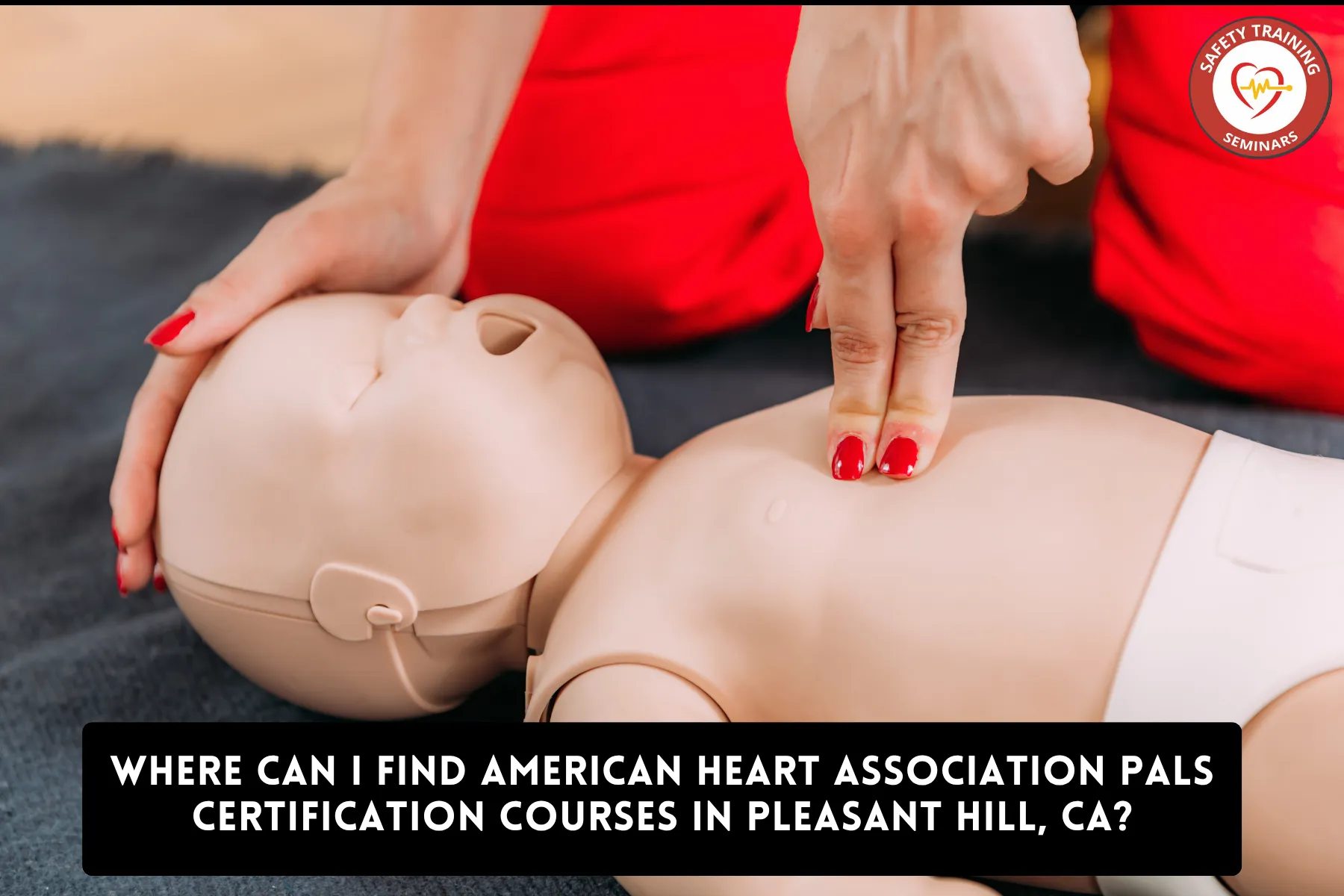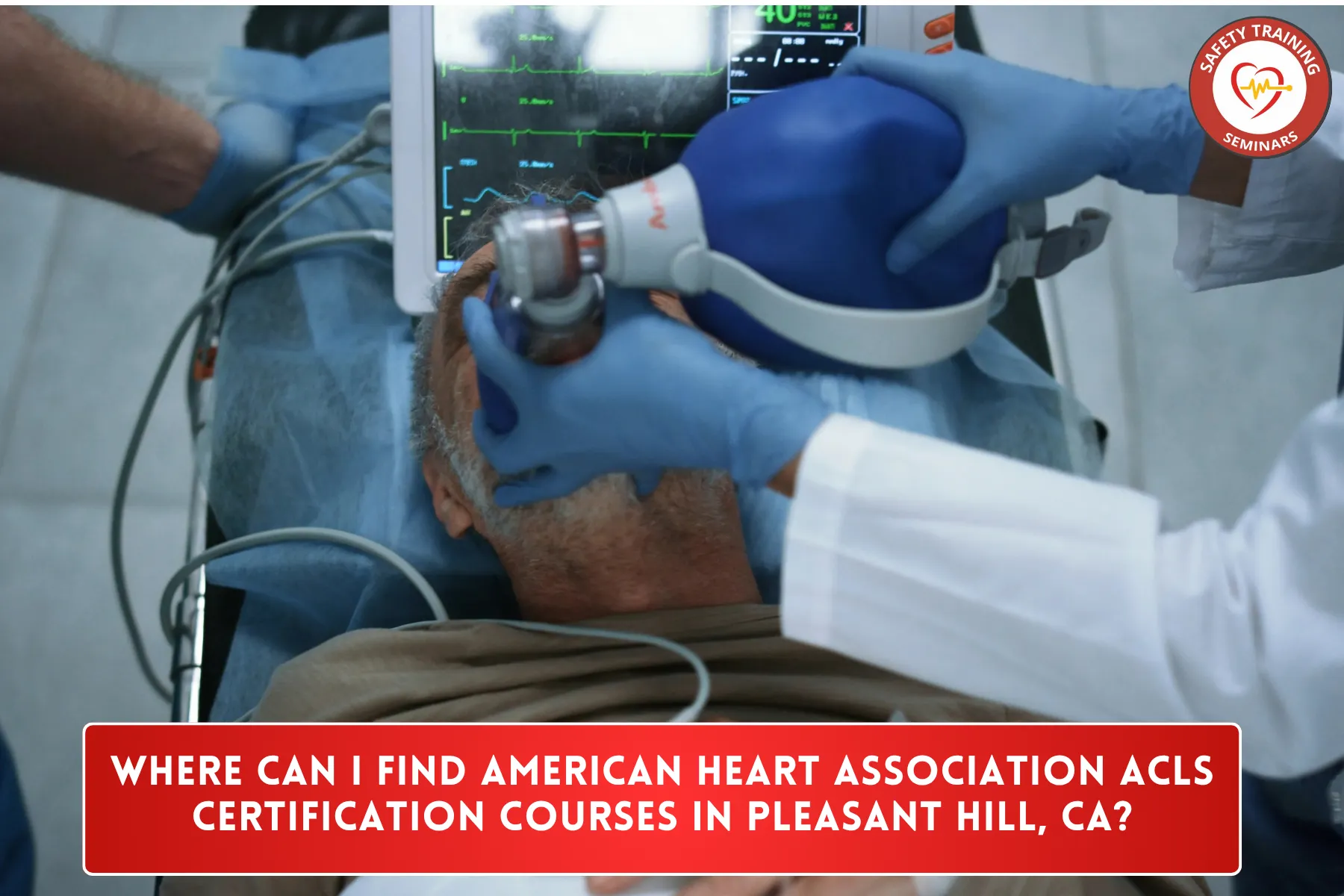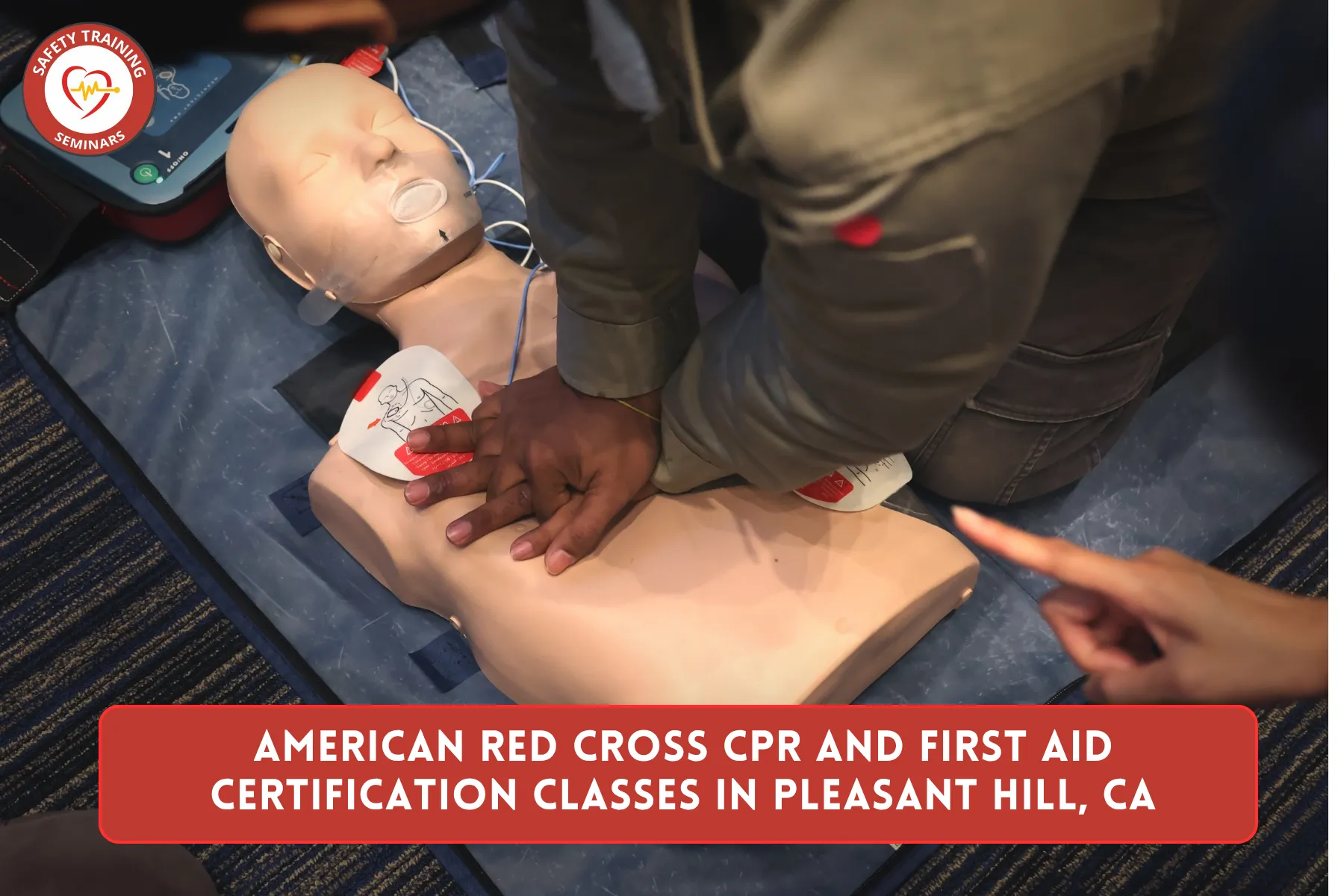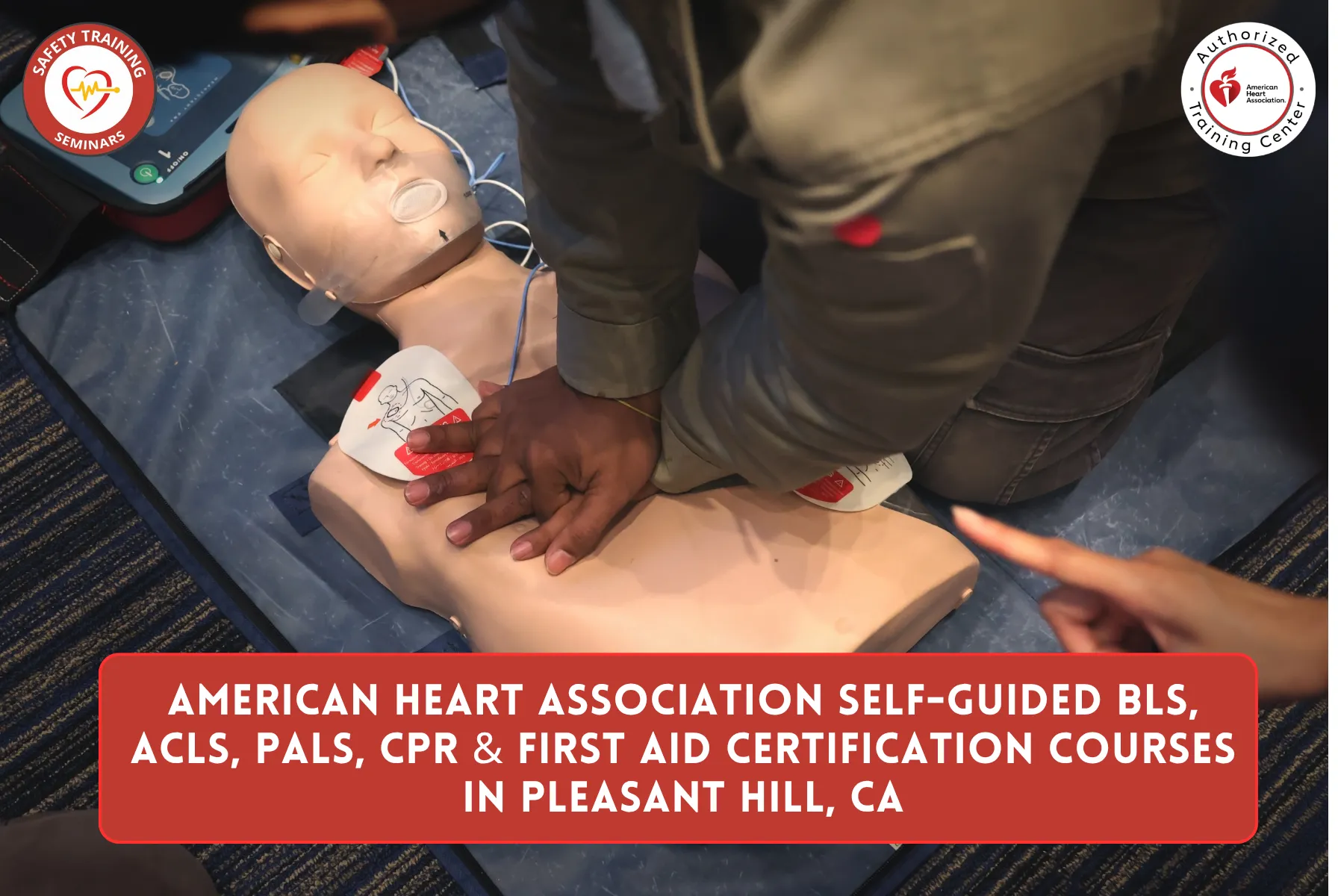
When it comes to choosing a CPR and First Aid course, residents of Pleasant Hill, healthcare workers, students, and local companies should begin by asking themselves a crucial question: what kind of emergency response training is actually required for your role? For example, a parent who is getting ready to respond to an emergency involving their child could require a different course than a nursing student who is getting ready for clinical practice or a workplace safety coordinator who is arranging employee training.
At 200 Gregory Lane, Suite C103, Pleasant Hill, California 94523, there is a training center that is owned and operated by Safety Training Seminars. Its local course information offers alternatives for cardiopulmonary resuscitation (CPR) and first aid, in addition to programs for healthcare providers such as basic life support (BLS), advanced cardiopulmonary resuscitation (ACLS), and pre-hospital life support (PALS). The appropriate option is determined by the skills that are being taught, the obligations of the learner, and any requirements that have been established by an educational program or an employer.
Start with the type of response you need to learn
CPR and First Aid are related, but they are not interchangeable. CPR focuses on responding when someone experiences cardiac arrest or another life-threatening breathing emergency. First Aid covers a broader range of urgent situations, including injuries, sudden illness, and environmental emergencies.
A combined CPR and First Aid course can be useful for people whose responsibilities may involve responding to more than one kind of emergency.
CPR and AED skills help participants understand how to recognize a cardiac emergency, perform CPR, and use an automated external defibrillator (AED). An AED analyzes the heart’s rhythm and provides a shock when indicated. Training helps learners become familiar with the device and the steps involved in using it safely.
First Aid skills address situations such as bleeding, injuries, sudden medical problems, and environmental emergencies. The objective is to recognize a problem, seek appropriate help, and provide care within the limits of the training received.
The American Heart Association’s Heartsaver First Aid CPR AED course is designed for people with little or no medical training. Its curriculum includes First Aid, adult CPR and AED use, and choking response for adults, children, and infants. Optional child and infant CPR AED modules may also be available depending on the course option.
Pleasant Hill’s healthcare network creates different training needs
Pleasant Hill sits within Contra Costa County’s wider healthcare network. Residents may work, study, or receive care across nearby communities, making it useful to understand the distinction between public emergency-response education and professional resuscitation training.
For example, John Muir Medical Center in Concord and Walnut Creek serves the surrounding region, while Contra Costa Regional Medical Center in Martinez operates a 24-hour emergency department. These facilities illustrate the range of clinical environments in the area, from emergency care to broader hospital services. Their presence does not mean they endorse any particular training provider; rather, they help explain why healthcare employers and clinical education programs may specify particular course requirements.
For people pursuing healthcare careers, training decisions should be made with their actual role in mind. A student preparing for a clinical placement should check the school’s current requirements. A medical assistant or nurse should confirm the course type and completion documentation accepted by their employer. A person working outside healthcare may need a general-public First Aid and CPR course rather than a healthcare-provider program.
That distinction matters because a course that teaches valuable emergency skills is not automatically a substitute for a different course required by a workplace, school, or professional setting.
Which course matches your responsibilities?
The following distinctions can help Pleasant Hill learners narrow down their options.
CPR and First Aid for the general public
A Heartsaver First Aid CPR AED course is intended for people who may need emergency-response skills at work, at home, or in the community. It is relevant to many non-clinical roles, including childcare, education, fitness, hospitality, and workplace safety.
Participants learn about First Aid emergencies, CPR, AED use, and choking response. Before registering, check whether the course option meets the specific requirements of the organization requesting the training. The AHA distinguishes between Heartsaver course options, so the course name alone may not tell the whole story.
Basic Life Support (BLS) for healthcare providers
BLS is designed for healthcare professionals, trained first responders, and people enrolled in healthcare training programs. It covers high-quality CPR, appropriate ventilation, AED use, and coordinated response in life-threatening situations.
BLS is often the more relevant starting point for nurses, nursing students, physicians, dental professionals, and other patient-facing healthcare workers when their employer or school requests an AHA BLS Provider course. The AHA states that its BLS course completion eCard is valid for two years.
Advanced Cardiovascular Life Support (ACLS)
ACLS is an advanced course for healthcare professionals who direct or participate in managing cardiopulmonary emergencies. It builds on BLS knowledge and covers areas such as systematic assessment, airway management, rhythm recognition, defibrillation, and high-performance team response.
It is not simply a more comprehensive version of a general CPR and First Aid class. ACLS is intended for clinicians whose professional responsibilities call for advanced resuscitation knowledge.
Pediatric Advanced Life Support (PALS)
PALS focuses on recognizing and responding to serious emergencies involving infants and children. It is intended for healthcare providers who may care for pediatric patients, including professionals in emergency, intensive care, and other relevant clinical settings.
The course addresses pediatric respiratory emergencies, shock, and cardiopulmonary arrest, with scenario-based practice and team-response concepts. Parents and childcare workers should not assume PALS is the appropriate course for them; general-public or pediatric First Aid and CPR training may better match their responsibilities.
What Pleasant Hill employers should consider before choosing workplace training
CPR and First Aid education can be relevant in offices, retail settings, fitness facilities, schools, childcare environments, and other workplaces where employees may be the first people available when an emergency occurs.
California workplace rules address access to medical services and First Aid, but the specific requirements depend on the applicable workplace standard and circumstances. For example, California Code of Regulations, Title 8, Section 3400 addresses the availability of medical personnel, trained First Aid assistance when an appropriate nearby medical facility is absent, First Aid supplies, and arrangements for prompt medical treatment.
Employers should therefore assess more than whether employees have taken a course. They should consider:
- Worksite conditions: The size of the workplace, number of employees, hazards, and distance from medical assistance can affect emergency planning.
- Coverage: Identify who may be available to respond during different shifts and operating hours.
- Course suitability: Confirm that the course content and completion documentation meet the applicable workplace standard.
- Practical readiness: Make sure employees know how to summon emergency services, where First Aid supplies and AEDs are located, and how to follow the workplace emergency plan.
California regulations also contain worksite-specific First Aid provisions, including requirements addressing trained responders and CPR in certain settings. Employers should consult the standard that applies to their industry rather than assuming one rule covers every workplace.
A course completion card is not the same as a professional license
When looking for cardiopulmonary resuscitation (CPR) classes, people frequently seek certification. Having said that, it is essential to have a clear understanding of the benefits that come with successfully completing a course.
Following satisfactory completion of the prerequisites for the American Heart Association course, participants who have successfully completed the course are awarded an electronic course completion card. The Heartsaver First Aid, CPR, and AED course completion cards are listed by the American Heart Association as having a validity term of two years. The particular course and card type are determined by the program that has been finished.
It is possible to document the completion of a specific training program with an electronic course completion card. There is no assurance that it will be accepted by every institution or workplace, nor does it provide a license to practice healthcare, nor does it broaden the professional scope of activity of an individual.
Before you sign up, make sure you check these details:
- What is the specific name of the course? Does the organization require Heartsaver First Aid CPR AED, BLS Provider, ACLS, or PALS, or does it require another program?
- Issuer: Is it necessary for the desired course to be offered by the American Heart Association or by another provider that has been specified?
- Format of instruction: Is traditional classroom instruction essential, or would a blended learning alternative be acceptable?
- Evaluation of skills: Does the format that was chosen include the necessary hands-on practice and evaluation of skills that is administered in person?
- Requirements for the card: Which completion card must be presented, and when does the card that is currently being used become invalid?
It is not sufficient to simply finish the online learning component of blended AHA courses in order to be awarded the course completion card while taking these classes. Additionally, the mandatory in-person skills workshop needs to be finished completely.
Finding CPR and First Aid training in Pleasant Hill
Safety Training Seminars lists a Pleasant Hill training center at:
200 Gregory Lane, Suite C103, Pleasant Hill, CA 94523
Its official local course page identifies offerings that include general-public CPR and First Aid, as well as healthcare-provider BLS, ACLS, and PALS. The course listing distinguishes between the general-public programs and healthcare professional courses, so prospective learners should review the specific program details rather than assuming every course follows the same format or issues the same type of completion card.
People comparing local options can review the CPR and First Aid certification course in Pleasant Hill and confirm the current course description, delivery format, registration details, and documentation before booking.
The provider’s official Pleasant Hill training center page is also the appropriate place to check its current course information. If you are registering for work or school, have the exact course requirement available when reviewing the options. This can help avoid choosing a general CPR course when your organization actually requires healthcare-provider BLS or an advanced course.
Frequently asked questions
Is a CPR and First Aid course the same as BLS?
No. CPR and First Aid courses for the general public focus on responding to common emergencies, while BLS is designed for healthcare professionals, trained first responders, and healthcare students. The AHA also states that First Aid is not included in its BLS course, so learners who need both should verify whether they must complete separate programs.
Which CPR course should a nursing student in Pleasant Hill take?
Many healthcare education programs require an AHA BLS Provider course, but requirements vary. Nursing students should check their school’s clinical-placement instructions before enrolling and confirm the required course name, provider, and card type.
Does an AHA First Aid CPR AED course include AED training?
Yes. The AHA Heartsaver First Aid CPR AED course includes CPR and AED training along with First Aid topics. Learners should confirm that they are registering for the combined course rather than a First Aid-only or CPR-only option.
How long is an AHA course completion card valid?
The AHA lists a two-year validity period for its Heartsaver First Aid CPR AED and BLS course completion cards. Check the expiration date on your own eCard and confirm any renewal deadline set by your employer or school.
Where is Safety Training Seminars located in Pleasant Hill?
The listed training center address is 200 Gregory Lane, Suite C103, Pleasant Hill, CA 94523. Review the provider’s official local page for current course information and registration details.
Choose training that fits the responsibility
A useful CPR and First Aid course should match the situations a learner may realistically face and the requirements of the organization requesting the training. General-public learners, workplace responders, healthcare students, and practicing clinicians do not necessarily need the same program.
For people in Pleasant Hill, Safety Training Seminars provides a local point to review CPR, First Aid, BLS, ACLS, and PALS course options. Start by confirming the exact course required, then check the training format and completion documentation before registering. That simple step helps ensure the course supports the learner’s actual responsibilities rather than simply matching a broad search phrase.