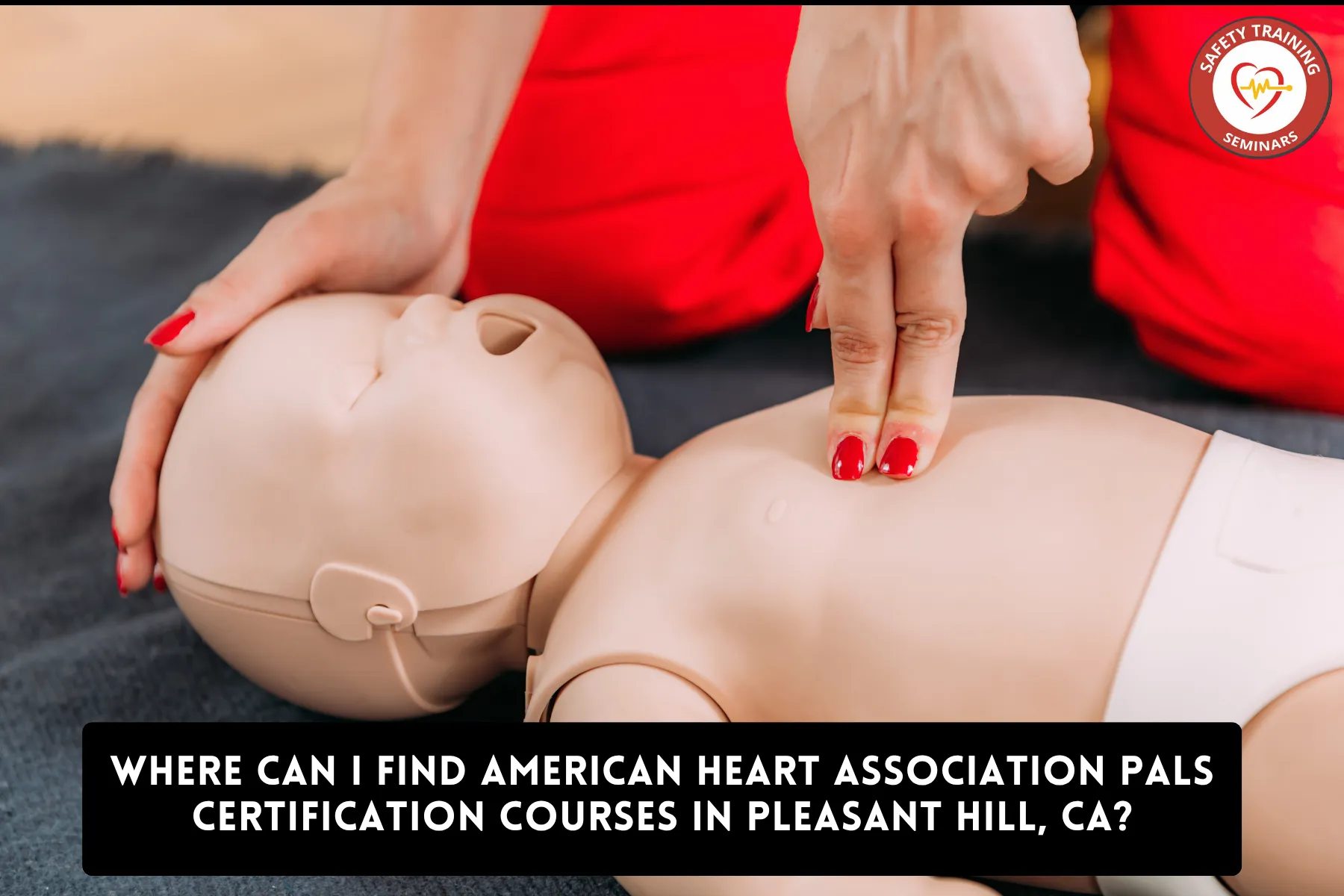
Healthcare professionals looking for American Heart Association (AHA) Pediatric Advanced Life Support (PALS) training in Pleasant Hill, CA, can explore local course options through Safety Training Seminars. PALS training focuses on recognizing and managing pediatric emergencies, including respiratory failure, shock, and cardiac arrest. It is intended for healthcare professionals who participate in advanced emergency care for infants and children.
If you need a PALS class in Pleasant Hill, start by reviewing the Pleasant Hill PALS course information. Check the current course format, registration requirements, and available sessions to determine whether the training fits your professional responsibilities. Confirm any requirements with your employer before enrolling.
How PALS Training Connects to Healthcare in Contra Costa County
Pleasant Hill is part of Contra Costa County, where healthcare professionals serve patients across a mix of community medical practices, hospitals, and emergency response services. For clinicians who may encounter pediatric emergencies, PALS education offers a structured way to practice recognizing a child’s deteriorating condition and responding with an organized care plan.
A useful local reference is John Muir Health. Its presence in the region makes it relevant for healthcare workers researching the local medical environment, although individual departments determine their own training expectations.
PALS training can be particularly relevant to professionals whose duties include:
- Assessing infants and children with breathing difficulties.
- Recognizing signs of poor circulation and shock.
- Responding to pediatric cardiac arrest.
- Applying pediatric resuscitation algorithms.
- Coordinating tasks and communicating clearly during emergencies.
The course is not a substitute for an employer’s clinical protocols or role-specific training. Before registering, verify that the selected course meets the requirements of your department or organization.
Understanding the Main Skills Taught in PALS
The value of PALS training lies in combining clinical knowledge with structured assessment and practical decision-making. The AHA’s current PALS curriculum reflects its 2025 CPR and emergency cardiovascular care guidelines.
Recognizing respiratory problems early
Participants learn to distinguish respiratory distress from respiratory failure and understand when early intervention is needed. Recognizing deterioration promptly helps healthcare teams determine the urgency of a patient’s condition.
Assessing shock and circulation
PALS covers the differences between compensated and decompensated shock. Understanding these clinical presentations helps participants identify serious circulatory problems and apply the appropriate treatment approach within their scope of practice.
Responding to cardiac emergencies
The course addresses unstable heart rhythms, cardiopulmonary arrest, and post-cardiac-arrest management. Participants practice applying structured algorithms rather than relying solely on memorized information.
Working as a coordinated team
Pediatric emergencies can require several healthcare professionals to perform different tasks simultaneously. PALS includes high-performance team dynamics, emphasizing communication, role clarity, and coordinated action.
These topics make the course relevant to healthcare professionals who need to demonstrate pediatric emergency response knowledge and practical skills.
What to Know About the Pleasant Hill Training Location
Safety Training Seminars is the provider identified for this Pleasant Hill PALS course search. Before making arrangements, verify the location and course details through the provider’s current listing.
The supplied training center address is 200 Gregory Lane, Suite C103, Pleasant Hill, CA 94523.
When reviewing the local course page, check whether the selected session takes place at this location, whether advance online coursework is required, and whether the registration includes the necessary skills assessment. These details can differ by course format and session.
The Pleasant Hill PALS training page is the appropriate starting point for reviewing the course offering and finding registration information.
Frequently Asked Questions About PALS Courses in Pleasant Hill
1. Where can I find an AHA PALS course in Pleasant Hill, CA?
You can start by reviewing the Safety Training Seminars PALS course page for Pleasant Hill. Confirm the current schedule, course format, registration details, and training location before enrolling.
2. Is PALS training intended for nurses and paramedics?
Yes. The AHA identifies nurses, paramedics, physicians, and other healthcare professionals involved in managing pediatric respiratory and cardiovascular emergencies as intended participants. Your specific training needs depend on your professional responsibilities and employer requirements.
3. Does the PALS course include hands-on practice?
Yes. Instructor-led PALS training includes practical learning activities and simulated pediatric emergencies. The HeartCode® PALS blended format combines online learning with a hands-on skills session. Confirm the requirements of the specific course before registering.
4. How long does an AHA PALS course completion eCard remain valid?
The standard AHA PALS Provider course completion eCard is valid for two years after successful completion of all course requirements. Check your employer’s policy for any additional training or renewal expectations.
5. What is the difference between PALS and BLS?
Basic Life Support (BLS) focuses on foundational resuscitation skills, including CPR and basic emergency response. PALS addresses more advanced assessment and management of pediatric respiratory, cardiovascular, and cardiac arrest emergencies. Choose the course that matches your job requirements.
6. How can I prepare for a PALS class?
Review the course prerequisites and registration instructions, arrange any required online learning, and refresh your knowledge of basic life support. Confirm the class schedule and skills assessment requirements with the training provider before attending.
Register for PALS Training in Pleasant Hill
For healthcare professionals in Pleasant Hill and the surrounding Contra Costa County area, choosing an appropriate PALS course begins with understanding workplace expectations and confirming the available training options.
Safety Training Seminars is the local provider identified for this search. Review the PALS course information for Pleasant Hill to check the current registration details, confirm the course format, and determine the next steps. Selecting training that matches your clinical responsibilities can help you prepare for the demands of pediatric emergency care.