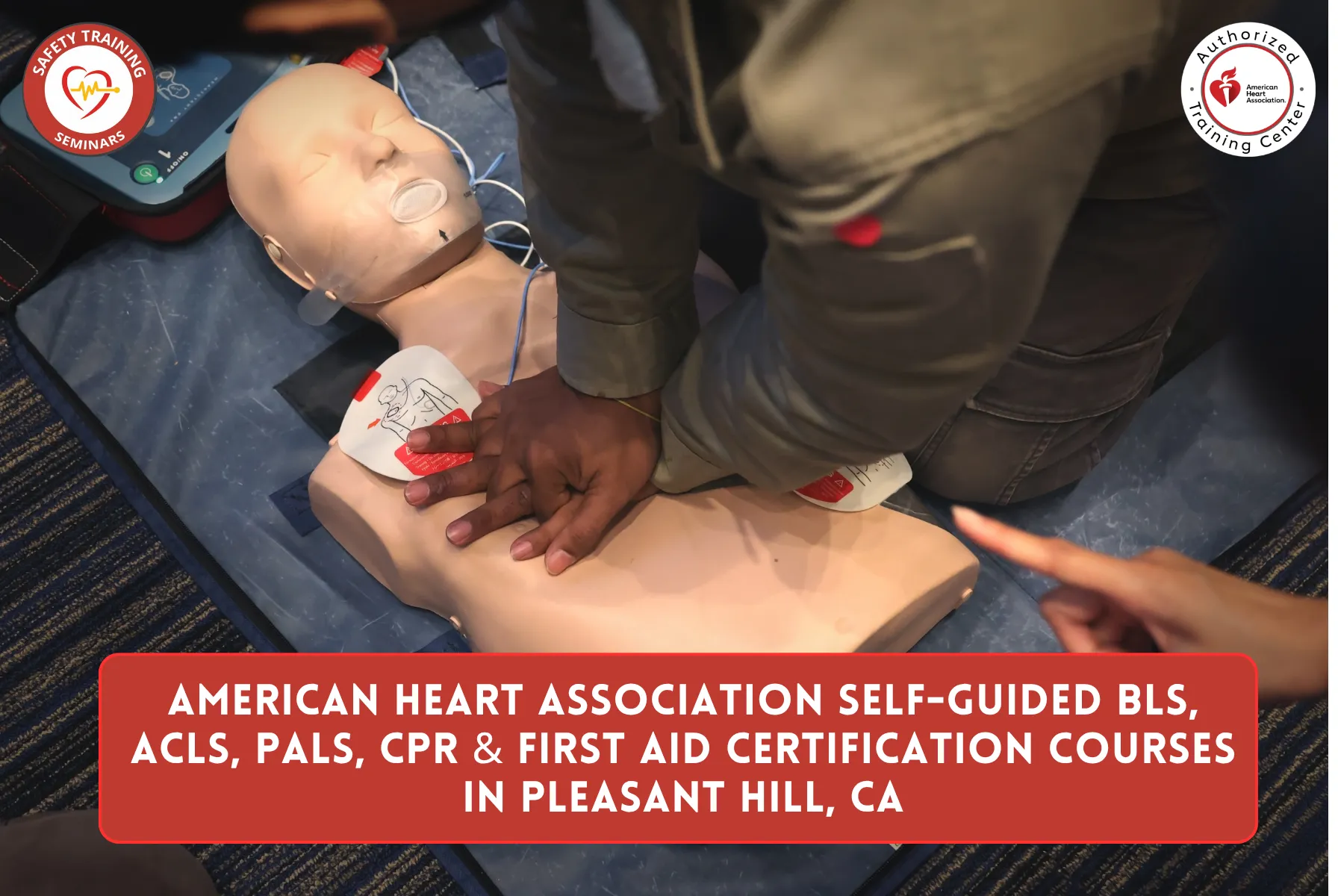
Balancing shift work at a East Bay medical clinic, studying for clinical rotations, or managing a local school district’s safety program makes traditional all-day classroom training difficult to schedule. For healthcare professionals, educators, and community members in Central Contra Costa County, American Heart Association (AHA) Self-Guided Learning offers a structured alternative. This format splits certification into two distinct parts: flexible web-based cognitive modules completed on your own device and a quick, hands-on skill verification session in Pleasant Hill.
Because professional mandates, clinical requirements, and workplace regulations differ significantly across industries, selecting the precise course level before enrolling is vital.
Key Takeaway: AHA Self-Guided Learning allows participants to review official cognitive coursework online at their own pace before completing a mandatory physical skills evaluation. This hybrid structure satisfies AHA credentialing standards while adapting to demanding professional schedules across Contra Costa County.
Understanding AHA Self-Guided Learning
AHA Self-Guided Learning (frequently referred to as blended learning or HeartCode® for advanced clinical disciplines) converts conventional lecture-based instruction into a self-paced digital experience.
Rather than sitting through hours of group slide presentations, learners log into a secure web portal to review video scenarios, study resuscitation science, and complete interactive case simulations.
- Cognitive Instruction: Complete interactive online modules at home or during workplace down-time.
- Concept Mastery: Revisit difficult concepts—such as arrhythmia identification, airway positioning, or pediatric shock protocols—until you achieve total familiarity.
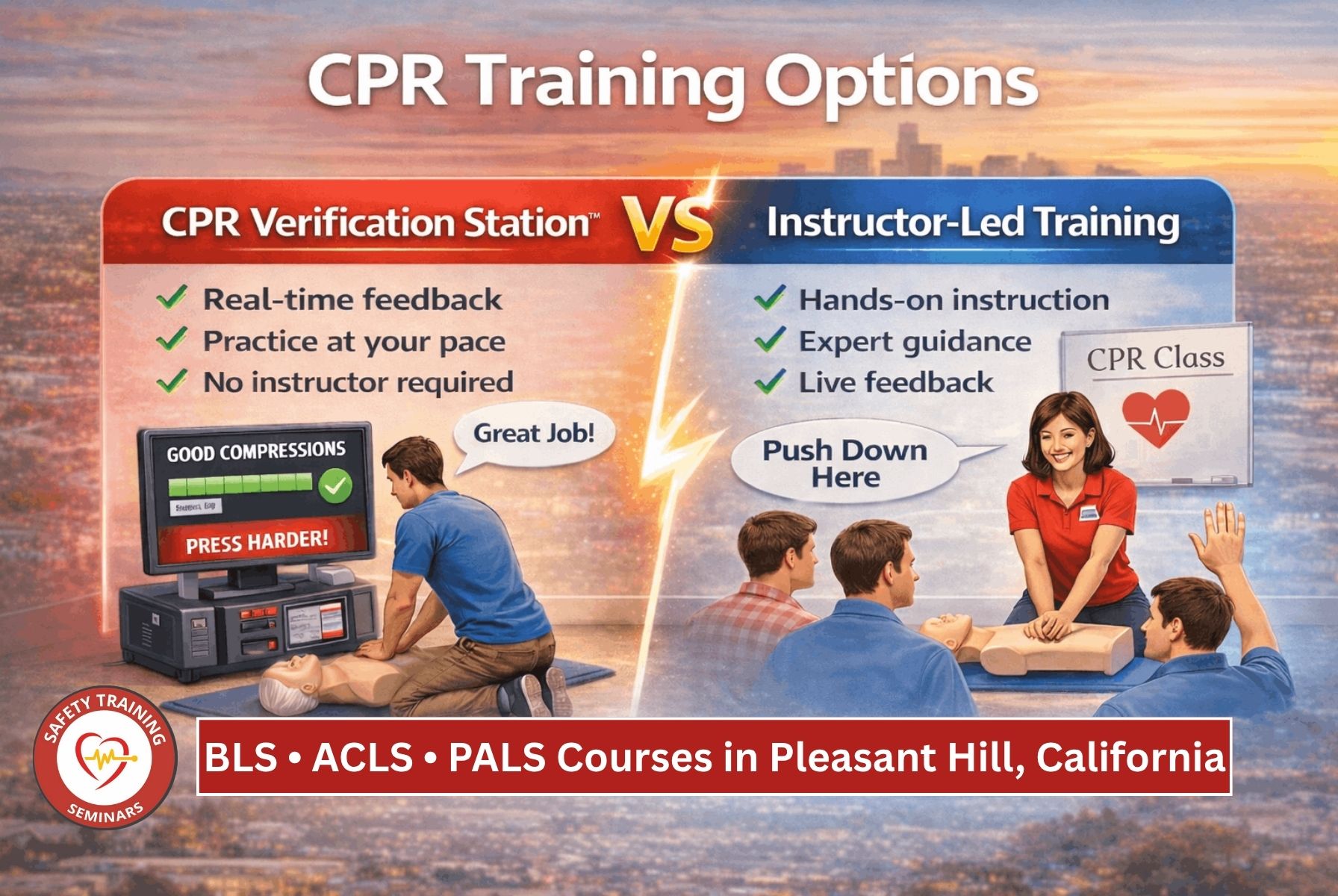
- Physical Skill Verification: Attend a scheduled appointment to demonstrate manual compressions, ventilations, AED operation, or advanced team dynamics on specialized evaluation equipment.
- Credentialing: Receive an official AHA course completion eCard upon successfully passing both the digital modules and physical assessment.
This model is fundamentally different from unaccredited “online-only” platforms. The American Heart Association mandates an in-person physical assessment to ensure candidates can execute effective compressions, manage ventilation devices, and perform real-time resuscitation maneuvers.
AHA Self-Guided Certification Options Available in Pleasant Hill
Blended learning applies to both advanced clinical credentials and foundational community safety courses, ensuring that every learner receives training tailored to their specific scope of practice.
Basic Life Support (BLS)
BLS forms the foundation of clinical resuscitation practice across hospitals, outpatient centers, and emergency services. The curriculum focuses on high-quality adult, child, and infant CPR, single- and multi-rescuer team response, bag-valve-mask (BVM) ventilations, foreign-body airway obstruction relief, and automated external defibrillator (AED) integration.
- Common Candidates: Registered nurses, nursing students, medical assistants, EMTs, physical therapists, dental professionals, and radiologic technicians.
- Format Advantage: Students review theoretical protocols independently, limiting their physical presence to a quick skills evaluation when scheduling BLS classes in Pleasant Hill.
Advanced Cardiovascular Life Support (ACLS)
ACLS expands on basic life support principles to address adult peri-arrest conditions, acute coronary syndromes, acute ischemic stroke, cardiac arrest, unstable dysrhythmias, and post-cardiac arrest care. Emphasis is placed on pharmacology, airway management, differential diagnosis, and resuscitation team leadership.
- Common Candidates: Critical care nurses, emergency department physicians, telemetry staff, surgical personnel, and paramedics.
- Format Advantage: Clinicians review advanced algorithm logic and drug dosages at home, reserving their in-person session for hands-on team leadership and airway management assessments.
Pediatric Advanced Life Support (PALS)
PALS targets severe respiratory, circulatory, and cardiac emergencies in infants and children. The course covers systematic pediatric assessment, pediatric shock protocols, respiratory emergency interventions, advanced pediatric pharmacology, and resuscitation team dynamics.
- Common Candidates: Pediatric nurses, emergency department personnel, pediatric dental staff, and advanced emergency care providers.
- Format Advantage: Healthcare personnel can refresh age-specific equipment sizing and weight-based drug algorithms on their own schedule before completing practical testing. Explore scheduling options via local ACLS and PALS training options in the East Bay.
Heartsaver CPR, AED, and First Aid
Heartsaver courses are built for non-clinical roles requiring documented life safety compliance. Modules cover adult, child, and infant CPR, AED usage, choking interventions, hemorrhage control, burn care, and responses to sudden medical conditions.
- Common Candidates: K-12 teachers, childcare personnel, youth sports coaches, fitness trainers, industrial safety team leads, corporate safety managers, and family caregivers.
- Format Advantage: Non-healthcare staff can finish First Aid and CPR lectures around their daily work schedule without committing to a full-day seminar.
Selecting the Right AHA Course Level
Registering for an incorrect course level can result in unnecessary costs or compliance delays with your employer or academic institution. Use this quick reference guide to identify the correct training path.
| Course Level | Primary Target Audience | Core Topics Covered |
| BLS | Healthcare professionals, clinical students, emergency responders | Multi-rescuer CPR, BVM ventilations, AED operation, infant/child resuscitation |
| ACLS | Physicians, ER/ICU nurses, paramedics, telemetry staff | ECG analysis, resuscitation drugs, advanced airways, code team leadership |
| PALS | Pediatricians, ED pediatric staff, pediatric clinic nurses | Pediatric assessment triangle, shock protocols, pediatric cardiac arrest management |
| Heartsaver CPR/AED | Educators, daycare staff, fitness instructors, office safety leads | Adult/child/infant CPR, AED deployment, choking interventions |
| Heartsaver First Aid | Industrial employees, construction staff, coaches, general public | Bleeding control, shock management, environmental injuries, medical emergencies |
Note: Credentialing policies vary. Always confirm specific course requirements with your employer, nursing board, or academic department head prior to enrolling.
Comparing Delivery Formats: Self-Guided vs. Classroom vs. Online-Only
Understanding the structural differences between training models helps ensure your final
- AHA Self-Guided (Blended) Learning: Combines remote web instruction with an essential, in-person physical assessment. It satisfies requirements set by OSHA, hospitals, and academic accreditation bodies because manual competency (compression depth, rate, recoil, and mask sealing) is directly verified.
- Traditional Classroom Instruction: Involves attending an instructor-led group presentation at a designated facility. This environment is ideal for learners who prefer structured group discussions and continuous instructor guidance throughout the cognitive phase.
- Unaccredited “Online-Only” Cards: Various online entities offer rapid certificates without requiring a physical skill demonstration. Warning: Healthcare systems, school districts, and state licensing boards almost universally reject online-only cards due to the total absence of hands-on verification.
Training Access for Pleasant Hill and Central Contra Costa County
Located along the Interstate 680 corridor, Pleasant Hill serves as an educational and residential hub within Central Contra Costa County. The city hosts Diablo Valley College (DVC), making it a high-density area for nursing candidates, allied health students, and emergency medical technicians completing pre-requisite credentials.
Additionally, healthcare workers commuting toward Concord, Walnut Creek, Martinez, Lafayette, or Benicia often face tight shift rotations that make conventional daytime classes impractical. By completing the theoretical portions of BLS, ACLS, PALS, or First Aid at home, local students and medical staff can minimize local travel and complete their required physical evaluation in a brief appointment near Gregory Lane.
Completing Your Assessment with Safety Training Seminars
For learners seeking a verified location to finish their practical skills testing, Safety Training Seminars provides structured AHA evaluation appointments.
Safety Training Seminars Pleasant Hill CPR Training Center Address:
200 Gregory Lane, Suite C103, Pleasant Hill, CA 94523
Students and community members preparing for foundational certification can review available appointments on the BLS and CPR classes in Pleasant Hill registration page. Clinical staff needing advanced certification updates can view available testing sessions using the dedicated ACLS and PALS courses in Pleasant Hill schedule.
Frequently Asked Questions
Is an AHA Self-Guided eCard identical to one earned in a traditional classroom?
Yes. Upon successful completion of both the online learning modules and the physical skills assessment, you receive an official American Heart Association eCard. It carries the exact same weight with hospital employers, nursing programs, and licensing boards as a traditional classroom card.
Can students commuting from nearby cities like Concord or Walnut Creek use the Pleasant Hill location?
Yes. Residents and healthcare professionals commuting from nearby communities—including Concord, Walnut Creek, Martinez, Lafayette, and Orinda—can complete their online cognitive training at home and schedule their hands-on assessment at the Pleasant Hill facility.
What documents must I present at my physical skills appointment?
You must present your printed or digital AHA online course completion certificate before your hands-on assessment can begin. Instructors cannot conduct skills testing without verifying that the digital cognitive component was completed.
How long does the in-person skills evaluation take?
While the digital coursework takes anywhere from 1 to 4 hours depending on the course complexity (BLS vs. ACLS), the physical skills test is focused and fast. Because your theoretical knowledge was verified online, the hands-on session typically takes only 30 to 45 minutes.
Will Diablo Valley College nursing programs or local hospitals accept an online-only CPR card?
Generally, no. Educational institutions, healthcare employers, and clinical oversight agencies strictly require an in-person physical demonstration of compression depth, ventilation technique, and AED handling. Cards issued without a physical skills test are routinely declined.
Final Steps for Certification Seekers
AHA Self-Guided Learning offers an efficient, scientifically backed route to securing your life safety credentials without requiring hours of stationary classroom lectures. By completing digital learning modules independently and verifying your practical skills in person, you maintain total flexibility over your schedule while satisfying mandatory workplace guidelines.
Before registering, double-check your employer or academic department’s exact certification standards. Once confirmed, complete your online modules and reserve your practical skills assessment at a local training facility to receive your official AHA eCard.